Joint Visit 360
TIMELINE
Mar 2026
ROLES DESIGNED FOR
SR • TSM • SM
Platform
Mobile App
MY ROLE
Product Designer
Overview
Designing a structured joint visit system for a mobile sales app used by field teams. The goal was not to create a new workflow, but to make existing coaching visible, structured, and useful without adding friction for sales reps.
Problem
The real problem wasn't coordination, it was that nothing was leaving a trace.
Joint visits were already happening. TSMs and SMs were already coaching SRs in stores. But every visit was arranged over WhatsApp, and whatever coaching happened walked out the door with the people. No objectives were set before. No feedback was recorded after. Leadership had no way of knowing if coaching was working, or even happening.
MY THINKING
I noticed the brief described this as a "logging problem", but I reframed it as a visibility and trust problem. SRs felt evaluated, not supported. Managers had no accountability structure. Leadership had no data. Fixing the log wasn't enough; I needed to fix how each role perceived the visit itself.
What's broken
Visits planned over WhatsApp; no record, no structure
No objectives set before the visit, SR walks in blind
Coaching insights shared verbally then forgotten
Leadership can't see if coaching is happening or working
SR feels observed, not supported, affects performance
What good looks like
Visit planned in-app: SR, store, date, focus areas
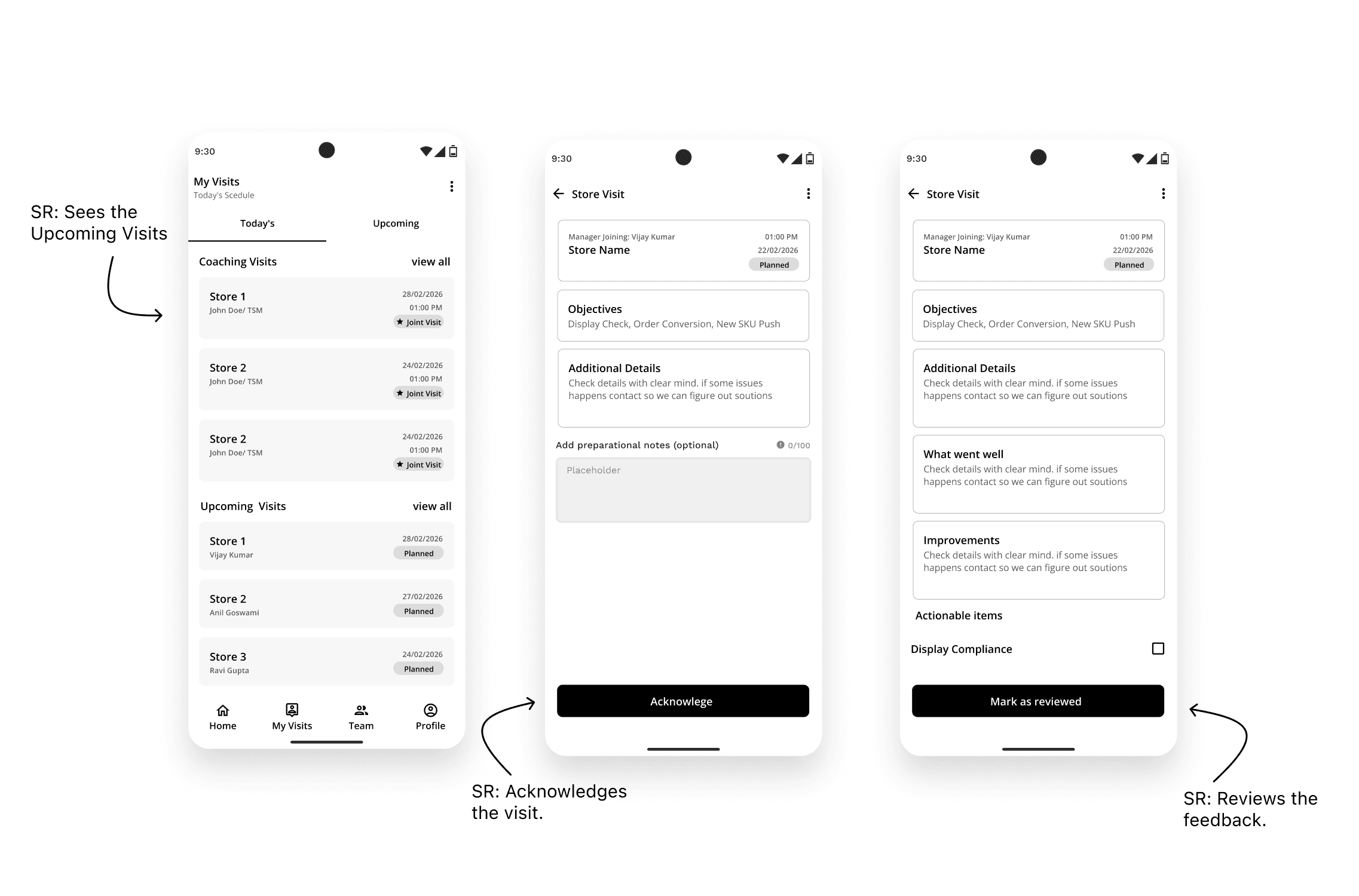
SR sees objectives in advance and can prepare
TSM logs structured feedback immediately after
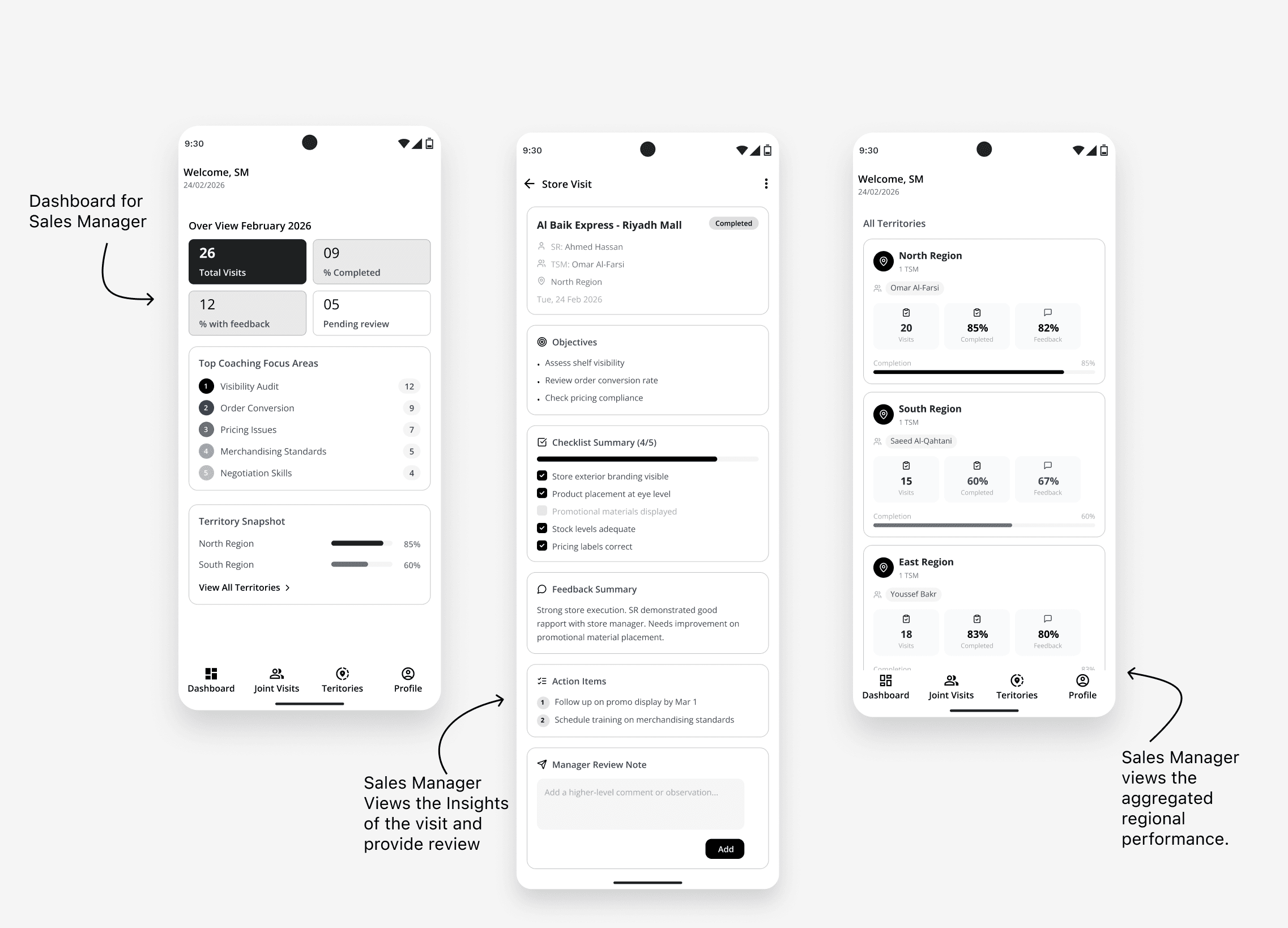
SM sees territory-level trends, not individual details
Language and framing feels like coaching, not evaluation
Insight
The problem wasn’t just missing logs. It was a lack of visibility and trust. SRs felt evaluated instead of supported, managers had no accountability structure, and leadership had no data. Fixing logging alone wouldn’t solve this. The perception of the visit itself had to change.
Approach
Users
SR: Wants clarity before the visit and transparent feedback after it
TSM: Needs to plan purposeful visits and log insights quickly
SM: Needs high-level visibility into coaching effectiveness
Journey
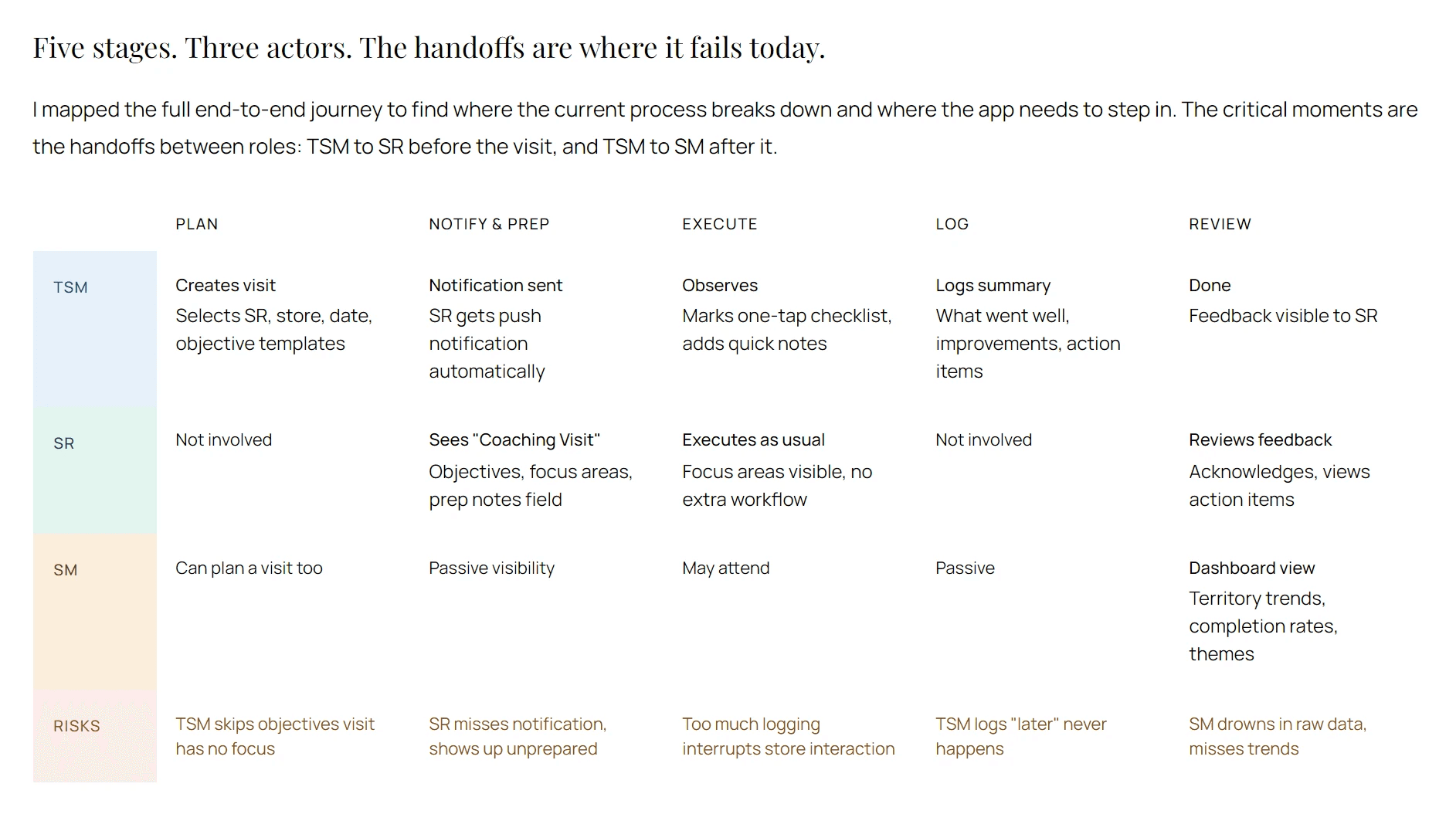
Constraints
SRs are time-constrained → no additional workload
Joint visits are occasional → flow must be lightweight
Experience must feel supportive, not intrusive
Solution
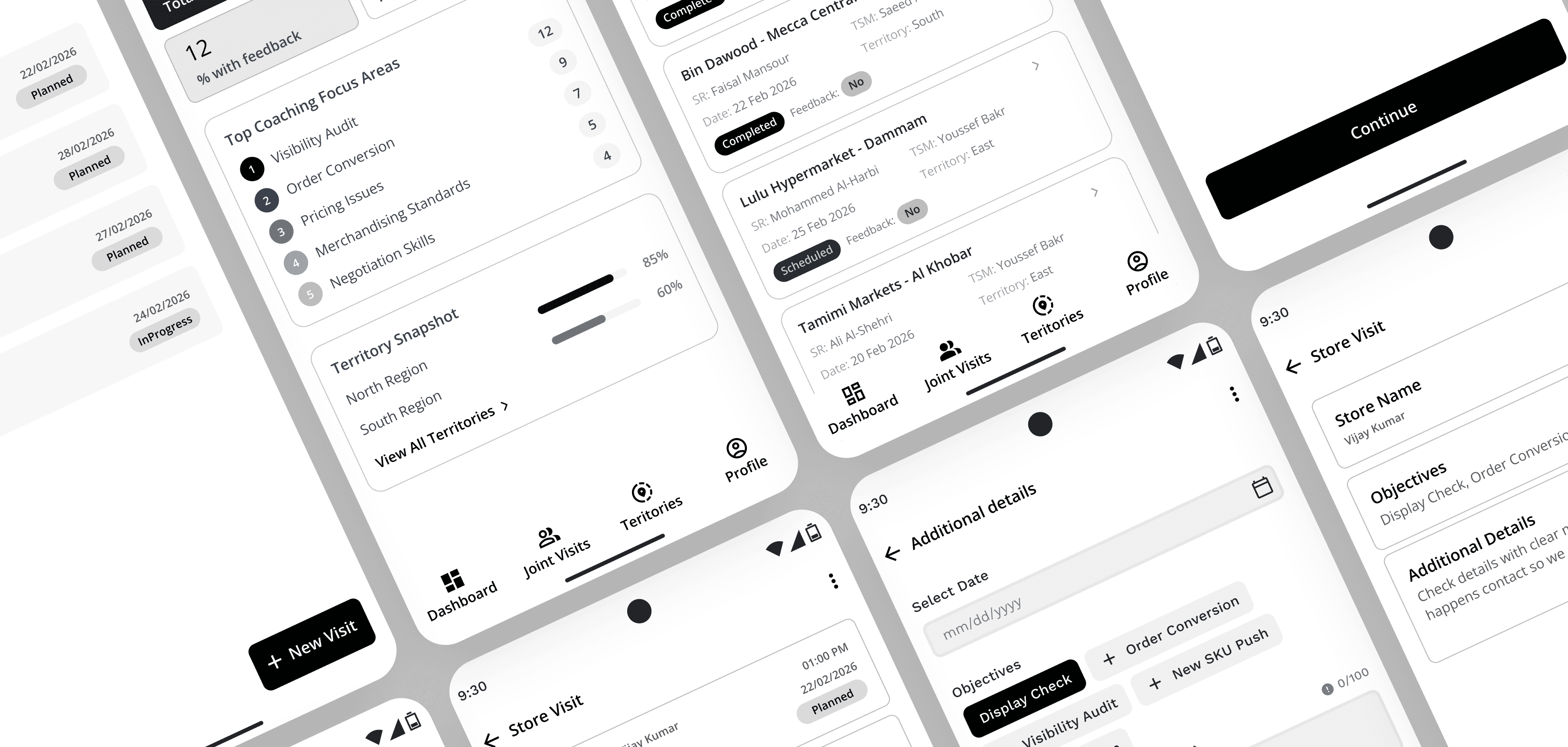
A lightweight system that structures joint visits end-to-end while keeping the SR experience passive and frictionless.
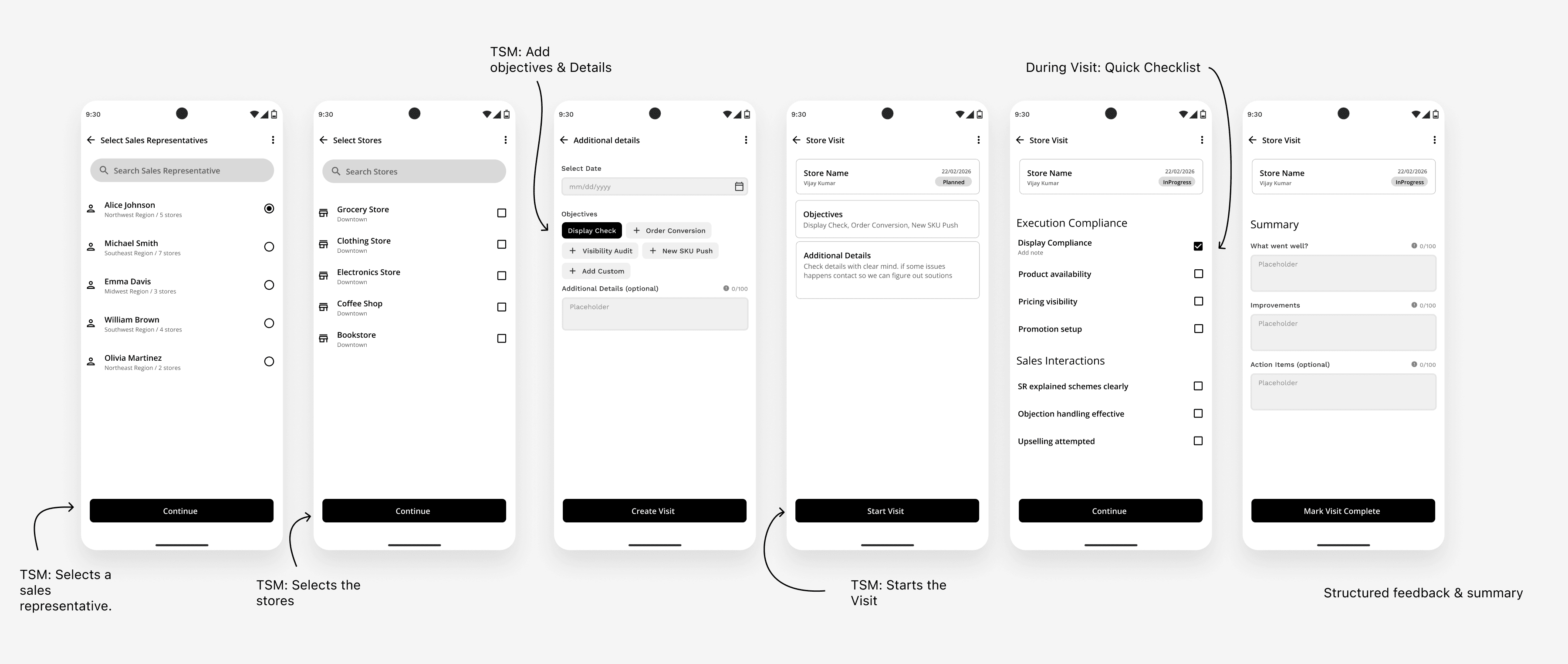
Create Visit: TSM selects SR, store, date, and objectives
Notify SR: SR receives notification with context and preparation details
During Visit: TSM uses quick checklist and notes without disrupting flow
Log Feedback: Structured summary with improvements and action items
Manager View: SM sees trends, completion rates, and coaching patterns
My ASSUMPTIONS
I assumed stores and SRs already exist in the system, the app has push notification capability, and managers already have access to SR lists. These are reasonable given the context of an existing sales app. They avoid over-engineering onboarding flows that aren't part of this feature's scope.
Impact
Three metrics. One qualitative signal. One named risk.
BUSINESS
Objective completion rate per visit
Are focus areas being cleared? This is the bridge between coaching activity and store execution quality. If low objectives are too vague or visits aren't being run with intent
BUSINESS
Revenue change at coached stores
Compare order value and conversion at stores with structured joint visits vs. without. The ultimate signal that coaching is translating to results, not just being logged.
FEATURE HEALTH
% of completed visits with structured feedback
Measures if the feature is being used properly, not just opened. If low logging is too long, too complex, or managers are deferring it until they forget.
QUALITATIVE SIGNAL
In-app pulse after 2–3 visits: "Did this coaching visit help you improve?"
Sent to both SR and TSM separately. Negative SR sentiment is the earliest warning that the feature feels like surveillance, not support even before the numbers show it. This is the signal I'd watch most closely in the first 30 days.
Risk: TSMs treat logging as a compliance checkbox
High completion numbers can mask meaningless feedback. I'd detect this by monitoring feedback character count, identical checklist patterns across visits, and low variation in summaries. If the pattern appears the feature is producing data without producing coaching. Response: simplify checklist further, add coaching prompts to guide better input, and review objective templates to make them more specific.